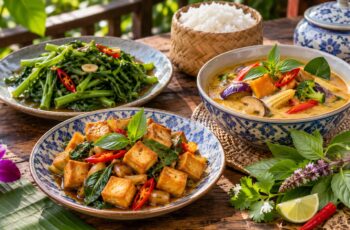
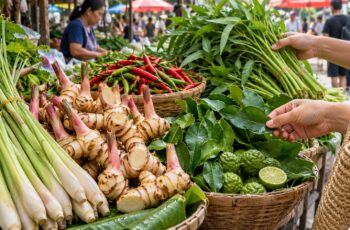
A bag of jasmine rice, a packet of tapioca starch or a tin of seafood can travel a long way before it reaches a kitchen. Thailand’s farming and food-processing industries supply domestic customers as well as markets abroad, which is why the country is sometimes described as a “kitchen of the world”.
The phrase is a description, not proof that every Thai product comes from one type of farm or that exports alone guarantee food security. Trade volumes and prices change from year to year.
Rice: a familiar staple
Rice is central to meals throughout Thailand and is also sold internationally. For a home cook, the practical choice may be between fragrant long-grain rice, sticky rice and another variety suited to a particular dish. Follow the packet’s cooking directions and adjust to your equipment.
The price on a supermarket shelf includes more than what a farmer receives: processing, transport, packaging, exchange rates and retail costs can all matter.
Cassava becomes a kitchen ingredient
Cassava is used for several purposes, including starch. Tapioca starch can thicken sauces or give certain desserts and doughs a characteristic texture. Processing matters; raw cassava and cassava starch are not interchangeable ingredients, and some cassava preparations require careful handling.
Sugar and seafood
Sugar appears in both sweet and savoury Thai recipes. The type and amount depend on the dish; taste as you cook rather than assuming every Thai meal needs to be sweet. Seafood may reach consumers fresh, frozen or preserved. Check storage guidance, provenance and allergy information on the product you buy.
What export figures can—and cannot—say
Production and trade databases such as FAOSTAT and WTO trade profiles can provide useful figures, but a meaningful comparison needs the same year, product definition and measure. Production volume is not the same as export volume, and the value of exports is not the same as the income of individual farmers.
We have not included a current ranking or an export figure here because those numbers need to be checked for the product and year being discussed. Readers interested in a specific claim can consult the underlying data rather than relying on an old headline.
For home cooks, the useful connection is the chain from growers and processors to the food on the table. Choosing the right ingredient—and storing and cooking it safely—is more useful than treating a slogan as a recipe.