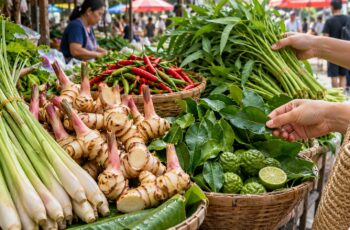
A bowl of rice with tofu, greens and a fragrant curry can be satisfying without meat or fish. Turning it into a vegetarian or vegan meal takes a little label reading: some Thai sauces and curry pastes contain fish sauce, shrimp paste or other animal ingredients.
Nutrition also matters across the whole day and week. No single recipe can guarantee that everyone gets enough vitamin B12, iodine or iron.
Start with flavour and protein
Use tofu, beans or another suitable protein alongside vegetables and rice or noodles. Choose a curry paste labelled vegetarian or vegan, checking the full ingredients. A vegetarian mushroom sauce or soy sauce can add savoury flavour, but brands differ and may contain allergens or a lot of sodium.
For a simple bowl, serve cooked tofu and stir-fried morning glory with rice, then add lime and chilli to taste. Use separate utensils if you need to avoid cross-contact with fish or shellfish.
Vitamin B12 needs a reliable source
Vitamin B12 is not naturally present in ordinary unfortified plant foods. Some foods are fortified, and supplements are another option. Check the label: a plant drink, nutritional yeast or breakfast cereal is useful for B12 only if it actually contains an appropriate amount.
The NHS notes that people following a vegan diet may need a B12 supplement. Anyone with dietary restrictions, symptoms or concerns about deficiency should ask a qualified healthcare professional for individual advice. Dairy and eggs can contribute B12 for vegetarians who eat them, but the amount still depends on the overall diet.
Iodine: do not assume all plant drinks are fortified
Iodine content varies. Some plant-based drinks are fortified; many are not. Read the label rather than assuming an oat or soy drink replaces all the nutrients in dairy milk. Where available, iodised salt can contribute iodine, but salt intake should remain within appropriate limits. Seaweed can contain very variable and sometimes excessive iodine, so it is not a dependable unlimited shortcut.
Iron and the rest of the plate
Beans, lentils, tofu and leafy greens can contribute iron. Plant iron is absorbed differently from iron in meat; pairing a meal with a vitamin-C-containing food such as lime or fruit can help absorption. Tea or coffee with a meal may reduce absorption for some people.
Pregnancy, breastfeeding, childhood and medical conditions can change nutritional needs. Ask a dietitian or clinician about your circumstances and suitable supplements. Enjoy the bowl for its flavour while planning the nutrients that a single bowl cannot promise.